


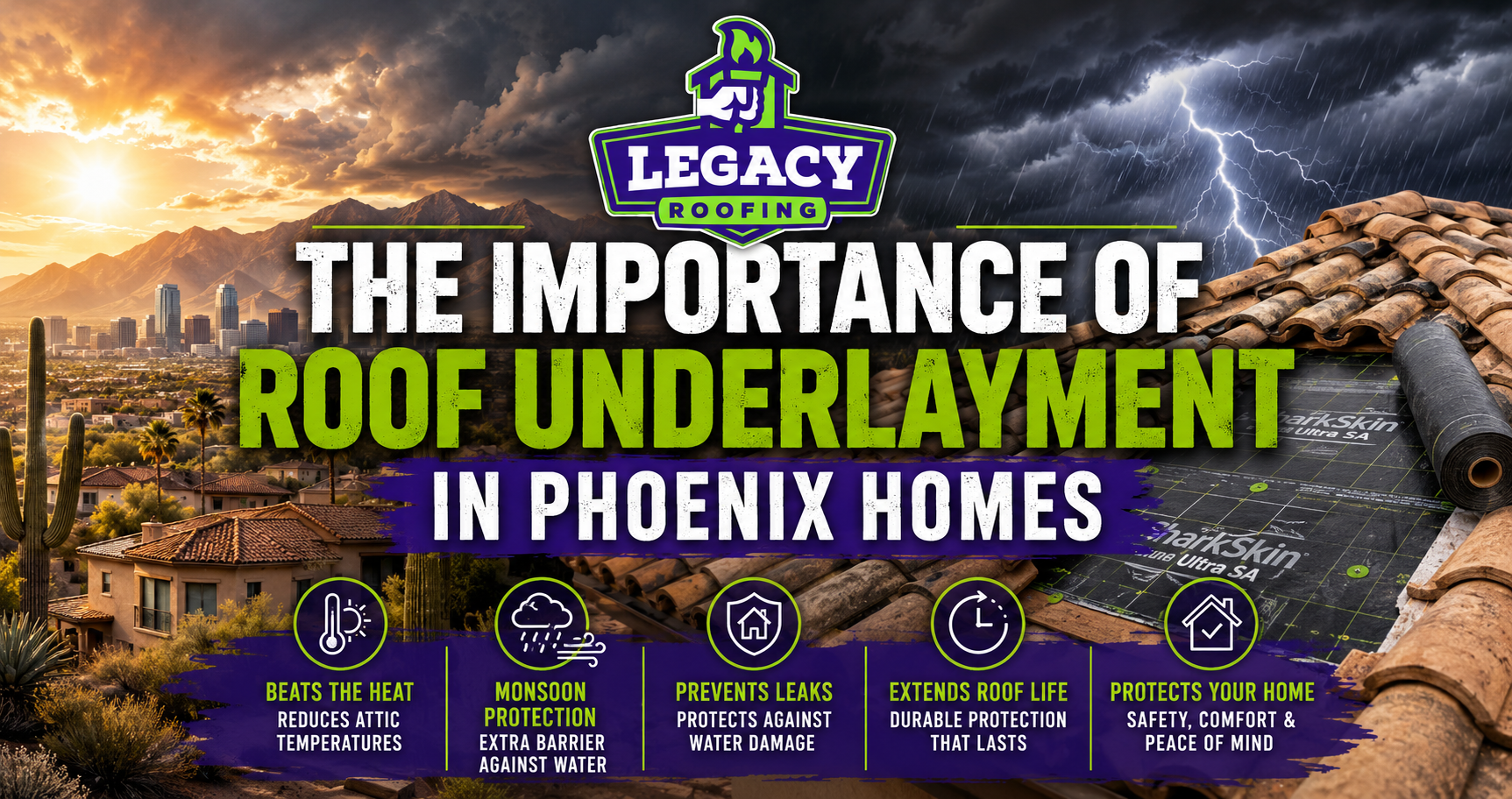
Arizona’s scorching summers and heavy monsoons can take a toll on your roof, which is why roof underlayment in Phoenix is key for protecting your home. Roof underlayment is a protective membrane installed between your roof deck and shingles or tiles, creating an extra barrier layer against the weather. Explore the importance of Arizona roof underlayment, its role in weather protection, and how Legacy Roofing’s underlayment services can shield your Phoenix home.
What Roof Underlayment Does for Arizona Homes
Roof underlayment in Arizona performs two main roles — protecting your home against heat and providing a roof water barrier. When Phoenix summer highs hit 105°F, your attic can quickly become extremely hot, and the right underlayment helps reflect heat away from your home. In the monsoon season, underlayment provides an extra barrier against any water that gets past your shingles or tiles.
Why Phoenix Heat Impacts Roof Underlayment Faster
While intense heat affects your roof, Phoenix’s climate has several unique factors that compound the issue. Alongside the temperature itself, Phoenix roofs experience some of the highest UV levels in the country, which can break down roofing materials and make your roof even more vulnerable to heat.
The shift in temperatures from intensely hot, sunny days to cooler nights also means your roof rapidly contracts and expands, which can strain the underlayment as it gets pulled by the tiles or shingles. Cool roof elements, such as underlayment for tile roofs, help reduce the effects of heat on your home.
How Tile Roofs Depend on Proper Underlayment Protection
Tile roofs are an extremely effective shield against most weather, especially high heat, as they naturally reflect more UV rays than asphalt shingles. However, they can be vulnerable to weather if wind or heavy rain forces water beneath the tiles. Proper tile roof underlayment replacement provides a barrier for roof protection under tile roofs, so that even if water gets driven under the tiles, your roof remains protected, and you can reduce the need for tile roof repair.
Common Signs of Roof Underlayment Failure
When your roof underlayment starts to fail, water and heat can enter, affecting your attic and the rest of your home. Keep an eye out for common signs of roof underlayment failure, including:
- Water stains and discoloration on your ceilings and walls.
- Mold or mildew growth, especially in the attic.
- Damp patches on the ceiling or walls.
- Recurring leaks.
- Visible roof damage, including blistering shingles or missing tiles.
- A sudden increase in granules or other roof pieces in your gutters.
If you’re seeing one or more signs of underlayment failure, it’s time to call a pro for roof underlayment repair. One of our roofing experts can inspect your roof and advise whether roof repair or roof installation services are the best solution for your Phoenix home.
Why Roof Leaks Often Start Beneath Roof Tiles
While roof tiles provide an initial barrier against rain, they’re not completely waterproof. The true waterproof barrier is the roof underlayment, which provides roof leak prevention for your Phoenix home. Leaks often start beneath roof tiles because the underlayment becomes damaged by age, wind, or severe weather. Leaks under the roof can also occur if there’s a problem with the roof flashing around skylights and chimneys. Regular professional roof maintenance can help reduce the need for tile roof leak repair in Phoenix.
Differences Between Felt and Synthetic Underlayment
Felt and synthetic are two of the most common types of modern roof underlayment. Felt underlayment is made from a fiberglass base saturated with asphalt, creating a heavy, water-resistant underlayment. It’s popular thanks to its lower upfront cost, although it typically has a shorter lifespan than synthetic underlayment and is more prone to damage, water absorption, and tearing.
Synthetic roof underlayment is made from polypropylene or polyethylene, which are durable, waterproof plastics that provide excellent weatherproofing for your roof. It’s lightweight and UV-resistant, so even when exposed to sunlight, it won’t degrade as quickly as felt underlayment. In addition to standard synthetic underlayments, high-performance designs like our SharkSkin underlayment offer even more protection against extreme heat.
Most felt underlayment lasts 10 to 20 years, while synthetic can last 25 to 50 years or more.
How Monsoon Storms Impact Roof Protection
Monsoon storms can significantly impact your roof protection due to the combination of moisture, intense winds, hail, and temperature fluctuations. Microbursts in Arizona monsoons can damage roof tiles and shingles, exposing the roof underlay. Hail bursts can also cause damage, particularly to flashing and other exposed areas. Moisture from the heavy rains can then enter the damaged areas, leading to leaks and mold growth.
When monsoons follow an extremely hot day, your roof is extra vulnerable due to the heat preconditioning, which can dry out asphalt roofs and make them more susceptible to damage.
The Role of Roof Underlayment in Preventing Water Damage
The role of roof underlayment in preventing water damage is to provide a second line of defense against moisture that gets past your roof tiles. Heavy winds can drive rain underneath the tiles, while damaged or missing tiles and shingles can expose the roof below. Gaps or cracks can also allow condensation to form underneath the roof tiles.
Proper roof underlayment prevents this moisture from impacting your roof deck, shielding your home from mold and leaks. Legacy Roofing’s roof rejuvenation services help keep your roof in good condition, reducing the risk of water damage and other issues.
Why Older Phoenix Homes Often Need Underlayment Replacement
The intense heat and monsoons in Phoenix can be a challenge for any roof, but older homes in particular may need underlayment replacement due to aging or outdated materials. Most older Phoenix homes have felt underlayment, which usually only lasts 10 to 20 years. If the roof has been damaged by heavy weather and the underlayment is exposed, it dries out and has an even shorter lifespan. Replacing the underlayment is essential for protecting the roof and can also be an opportunity to upgrade to a modern option, such as a synthetic underlayment, that provides better weatherproofing and durability.
How Roof Inspections Help Identify Underlayment Problems
A roof inspection by the pros at Legacy Roofing helps identify underlayment problems by thoroughly checking for interior and exterior signs of damage and roof risk. We’ll look for surface damage, including wrinkling and tearing that may expose the underlayment, and examine the attic or ceiling for signs of water or heat damage. We’ll also examine the flashing and other key areas to confirm that the underlayment was installed properly and remains secure against weather-related risks.
Most roof underlayment should be inspected every one to three years, while older homes should be inspected annually.
What Happens During Roof Underlayment Replacement
Roof underlayment is a comprehensive process that may take one to three days, depending on your roof. First, your roofing pros prep the area to protect your yard, home, and landscaping. Next, they remove the outer roof layer and the underlayment to access the roof deck. If there’s any damage to the roof deck, they make the necessary repairs. Then they install a new underlayment and check that it’s watertight before installing the roof exterior and flashings and performing the final safety and quality checks.
Benefits of Professional Roof Installation and Repairs
Hiring a pro for roof installation and repairs helps protect your home against water damage, prolong the lifespan of your roof, improve energy efficiency, and ensure warranty and insurance compliance. Improperly installed roofing can deteriorate quickly, leading to costly repairs and even putting your home’s structural integrity at risk in the event of severe water damage. Professional roof installation prevents these issues and improves energy efficiency by ensuring you have the best roofing for temperature insulation.
Most roofing warranties and homeowner’s insurance can also be voided by DIY repairs, so professional installation and repairs keep your warranty compliant and your premiums lower.
Why Homeowners Choose Legacy Roofing
Local homeowners count on Legacy Roofing for expert roof underlayment and roof maintenance in Phoenix because we offer:
- Over 35 years of experience providing professional roofing services.
- Knowledge about the challenges of roofing in Phoenix, including temperature swings, intense heat, and monsoons.
- Commitment to customer satisfaction at every stage of the roofing process.
- A family-owned business dedicated to serving our neighbors and giving back to our community.
Schedule a Roof Inspection for Your Phoenix Home
Whether you’re looking for emergency roofing underlayment replacement or simply a routine roof inspection, Legacy Roofing is your go-to solution for a dependable roofing contractor in Phoenix. Our team of experienced pros is here to help with all your local roofing needs so your home can be as safe, efficient, and comfortable as possible. Try our roof cost estimator for a free, instant quote, or contact us today to schedule a consultation.
