


Roof underlayment may not be a common household term, but it’s an important part of your home, especially in Phoenix, Arizona’s harsh desert climate. It’s the protective layer between the roof deck and your roof shingles or tiles. Blocking heat transfer and moisture, this material plays an important role in home comfort and preventing damage from the elements.
SharkSkin Ultra Radiant protects your home by reflecting heat that would otherwise pass through your roof. We’ll look at how it blocks radiant heat, plus other benefits, including roof deck protection against moisture, leaks, and mold.
Understanding Heat Transfer Through Your Roof
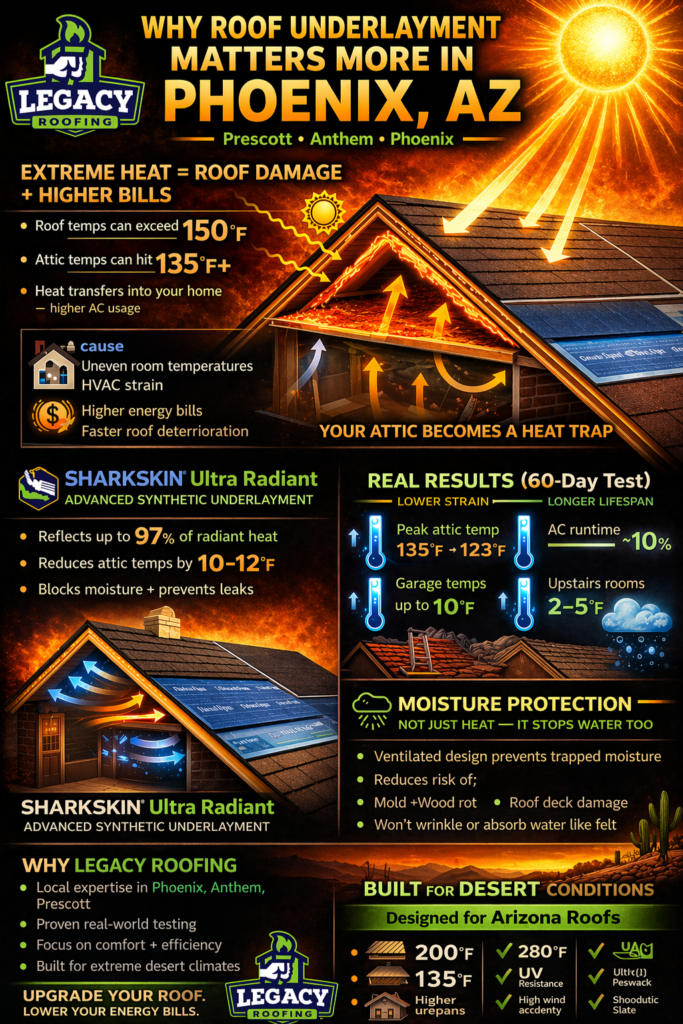
In summer, high temperatures around Phoenix, Anthem, and Prescott regularly exceed 100℉. Exposure to heat can cause the temperature of roof surfaces to rise above 150℉, creating thermal stress that can cause materials to crack, warp, and become brittle, create gaps in seals, or loosen fasteners.
Heat transfer has significant effects even without damage. As heat from the sun reaches the rooftop, surface heat radiates into the attic, but it doesn’t stop there. The heat continues to transfer through the air and building materials, increasing indoor temperatures and the demand on your air conditioning system.
This can lead to:
- Uncomfortably warm temperatures
- Temperature fluctuations from room to room
- Increased wear on your HVAC system
- Higher monthly energy bills
- Costly roof repair and early roof replacement
What Makes SharkSkin Ultra Radiant Different
SharkSkin Ultra Radiant is a synthetic roof felt that differs from traditional roofing underlayments in that it doesn’t absorb heat energy or slow its movement through the material. Instead, it reflects up to 97% of radiant heat. In doing so, SharkSkin can reduce attic temperatures by 10-12℉, based on testing performed by our team at Legacy Roofing. It’s also an effective roof moisture barrier that protects roof coverings and your home against water damage.
How Radiant Heat Is Stopped at the Roof Deck
Three layers of blended polypropylene make SharkSkin Ultra Radiant an effective heat and moisture barrier. These include a reflective layer that directs heat away from the roof and minimizes heat gain in the attic. Even though the underlayment sits below shingles, tile, slate, or metal, it effectively prevents heat from passing through, providing a more effective roofing heat barrier than traditional products.
Benefits of Installing SharkSkin in Phoenix, Anthem, and Prescott
In the summertime, daytime high temperatures regularly exceed 100℉ and can sometimes approach 120℉. SharkSkin is an ideal roof underlayment for hot climates. Its heat- and moisture-resistant properties provide the following benefits:
- Enhanced Comfort: If some rooms in your home tend to be hotter than others, SharkSkin helps more evenly distribute temperatures. The effect is more noticeable in upstairs rooms and garages. After installation, there can be a narrower gap in temperatures between different areas.
- Reduced Wear on AC Systems: Testing also showed that, after SharkSkin roof underlayment installation, AC compressor runtime was reduced by about 10%, which can lower utility bills. This also limits mechanical AC stress and reduces wear and tear, meaning fewer repairs and a longer system life.
- Mold and Rot Prevention: The synthetic roof felt mat is ventilated, channeling airflow so moisture doesn’t get trapped. Effective moisture removal prevents mold and wood rot, while also increasing the reliability and durability of the underlayment and lifespan of your roof system.
Real Temperature Reductions in Phoenix, Anthem, and Prescott, Arizona, Attics
At Legacy Roofing, we ran 60 days of tests on SharkSkin Ultra Radiant (30 days before and 30 days after installation), measuring both outdoor and attic temperatures. We logged data every hour of the day. In doing so, we were able to assess the radiant heat barrier’s performance in peak-heat conditions.
The key results we found include the following:
- A 12℉ reduction in peak attic temperatures, from 135℉ to 123℉.
- The attic averaged 9℉ cooler between 6:00 am and 6:00 pm.
- The barrier limited midday heat gain to just 3℉.
How Cooler Attics Improve Whole Home Comfort
The effects we found on indoor temperatures weren’t limited to the attic. We also noticed that upstairs rooms ran 2-5℉ cooler, with less of a gap with downstairs rooms. In the garage, our tests revealed that temperatures ran up to 10℉ cooler than before the roof underlayment installation.
Heat naturally moves from warmer to cooler areas, radiating from the roof to the ceiling insulation, moving through materials via conduction, and passing through gaps via convection. Therefore, a cooler attic means there’s less heat to reach other parts of your home and affect the comfort of those inside.
Reducing Heat Impact on Roofing Materials
Aside from keeping your home cooler, our roofing heat barrier protects the materials around it. Excessive heat can cause asphalt shingles to dry out, crack, and become brittle. It can do the same to wood shakes, which may also become a fire risk. Heat damage can also occur due to thermal shock, or the expansion and contraction of roofing materials throughout the day, causing them to split and crack, and fasteners to loosen.
SharkSkin prevents these heat-related issues, avoiding costly roof repairs and replacements.
Moisture Protection and Leak Defense Built Into the System
As mentioned earlier, the roof underlayment material is ventilated. By channeling airflow, moisture is removed rather than trapped. Traditional materials offer less moisture protection. However, the risk of mold and moisture damage to the synthetic roof felt and the underlying roof deck is minimized.
SharkSkin has three layers of defense, so it is unlikely to leak or absorb water, which can cause traditional felt to wrinkle and displace shingles.
Why Synthetic Underlayment Outperforms Traditional Felt
While traditional felt is appealing to homeowners on a budget, it has many disadvantages. It’s prone to tearing in high winds, can absorb water, and is heavier. These aren’t concerns with the latest polymer materials, so let’s look at how they compare.
The benefits of synthetic roof underlayment vs. traditional felt made of paper, fiberglass, or asphalt:
- Durable: The high-strength synthetic material withstands high winds and is less likely to tear; it’s also UV-resistant and can tolerate temperatures up to 280℉.
- Lightweight: Synthetic felt adds less weight to the roof and is one less stress on your roof to support.
- Quicker to Install: Synthetic roofing underlayment is available in wider, longer rolls with more material than felt, saving time during installation.
- Safer Installation: High traction makes the material safer to walk on; while workers must use fall protection, there’s a lower risk of slipping in wet and windy conditions.
- Stronger Warranty: SharkSkin Ultra Radiant comes with a 50-year warranty, so you’re covered for any defects in the underlayment material.
Long-Term Roof Performance in Extreme Desert Conditions
High reflectance, UV resistance, and thermal stability make SharkSkin suited for Arizona’s desert climate. A light gray surface helps it stay cooler, which is also beneficial for installers working in the heat. The material resists decay even if left exposed due to a construction delay. Its durability is important in a region with extreme heat for much of the year, and where clouds rarely obscure the relentless sun.
How SharkSkin Supports Better HVAC Efficiency
A cooler attic improves comfort because overall heat gain is reduced. By limiting the amount of radiant heat entering living spaces, rooms below the attic stay cooler. There’s also less heat warming cool air in HVAC ducts, so your AC system runs more efficiently. A well-ventilated attic contributes to reduced moisture as well, which further improves comfort and efficiency; dryer air feels cooler, so you don’t need to set the thermostat as low. It also prevents mold.
Best Roofing Systems for Radiant Barrier Underlayment
A synthetic radiant barrier provides shingle, wood shake, metal, slate, and tile roof heat protection. Therefore, it’s suited for a wide range of roof installations and the most common roof types in Arizona. It can be installed on roofs regardless of pitch and reflects heat and repels moisture to protect whatever material is above or below it, while helping keep your home cool and comfortable.
Why Legacy Roofing Is Phoenix, Arizona’s Trusted Roof Underlayment Installer
We are a leader in Arizona’s roofing industry. Whether providing residential roof installation or repair, or synthetic roof felt for roof deck protection to reduce the effects of radiant heat on your home, you can expect quality service from our experienced tradesmen. Our team is committed to ensuring your roof can withstand the most extreme weather.
To learn more about roof underlayment installation or replacement for your Phoenix, Prescott, or Anthem home, contact Legacy Roofing today.
