


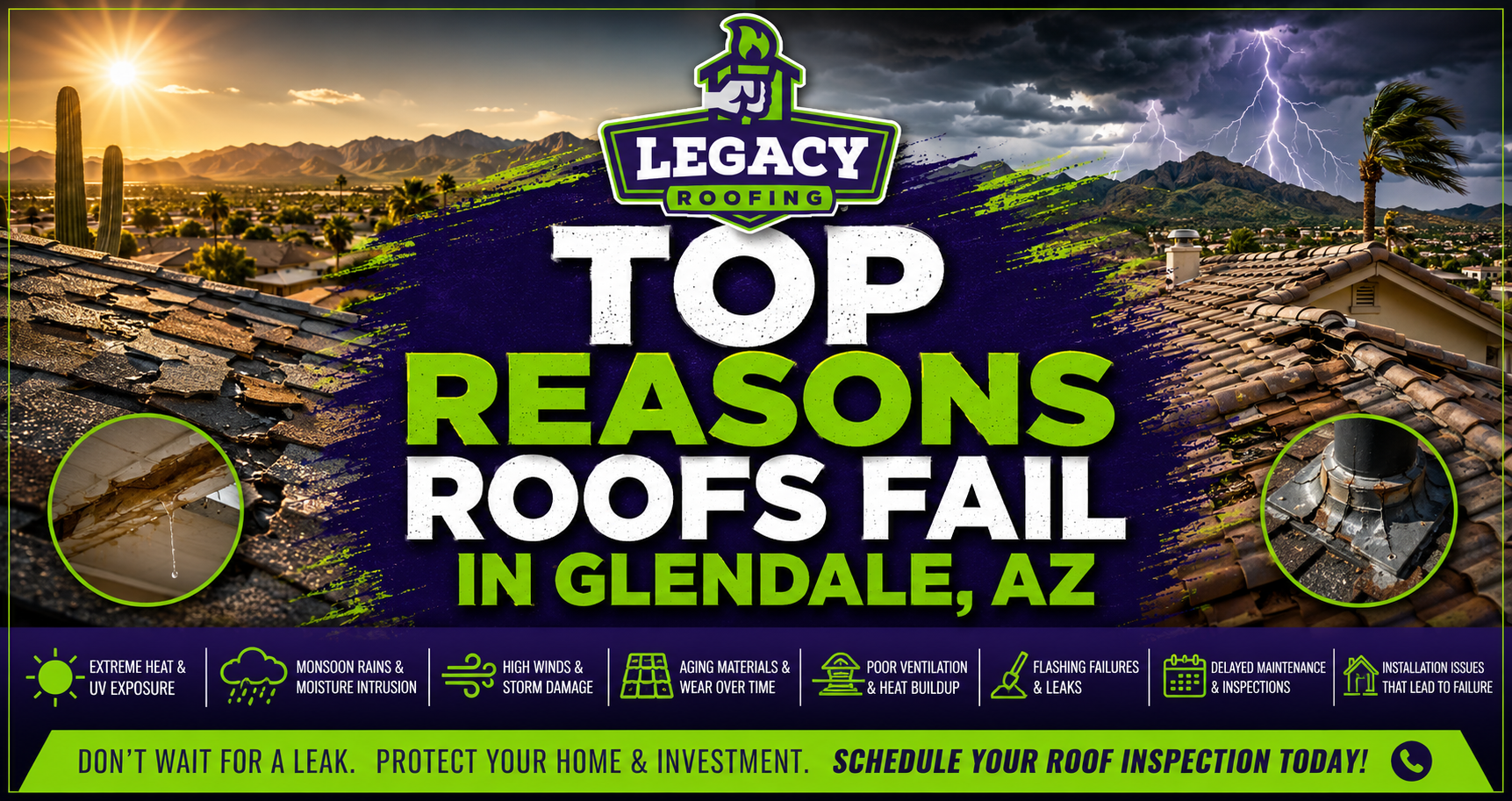
Living in Glendale and the Sonoran Desert comes with many perks, from hiking and biking desert trails to games at the State Farm Stadium, but the sunny climate can be hard on roofs. The Valley of the Sun experiences harsh conditions, including sweltering temperatures, intense UV rays, and summer monsoons, all of which are among the main culprits of early roof failure in Glendale, Arizona.
Why Roof Failures Occur in Glendale
Located in the Sonoran Desert, Glendale homes are subjected to extreme heat, intense UV rays, monsoon season, and other local factors that impact residential roofing performance. While some Glendale roofs fail due to old age, many experience accelerated wear and deterioration thanks to a combination of harsh elements and a lack of proactive measures.
How Arizona heat accelerates roof deterioration
Rooftop temperatures in Glendale regularly exceed 150°F to 180°F during the summer. This intense heat causes underlayment, tiles, and shingles to expand during the day, then contract in the evening as temperatures cool off. Continuous cycles of expansion and contraction accelerate wear on roofing materials, eventually weakening structural integrity, cracking materials, and increasing the risk of water intrusion.
The impact of UV exposure on roofing materials
Glendale is one of the sunniest cities in the country, and its proximity to the equator means that the area is exposed to high UV levels year-round. Regardless of heat, constant exposure to intense UV rays breaks down the chemical bonds in roofing materials.
Asphalt shingles, for example, are prone to becoming brittle as UV rays degrade the binder and protective layer of mineral granules. Once the outer roof materials fail, UV rays also damage the underlayment, leaving your home vulnerable to water damage and causing the exterior to look worn.
Roof leaks and moisture intrusion issues
As thermal expansion and UV exposure break down roofing materials, water intrusion further degrades the system. During monsoon season, heavy precipitation can penetrate vulnerable roof systems and reach underlayment and decking. When moisture is trapped in these layers after a storm, it warps materials and increases the risk of mold. Persistent moisture also rots the roofing decking wood and compromises the structural integrity of the roof.
Storm damage and high wind effects on roofs
Glendale experiences haboobs and monsoons during the summer, and wind gusts from these storms can surpass 60mph, with microbursts sometimes hitting 100mph. These gusts create an uplift effect on vulnerable roofing materials, which weakens adhesive seals, dislodges tiles, damages underlayment, and leaves the roof deck exposed to storm debris and water intrusion. High winds can also make nearby debris into projectiles that can fracture roof tiles.
Poor roof ventilation and its consequences
Roof ventilation problems in Glendale trap extreme buildup and moisture in the attic. When the heat can’t escape through a proper ventilation system, the heat behaves like a convection oven and bakes roofing materials from inside. Like intense heat on the outside, an overheating attic causes materials to expand and contract and accelerate wear.
Roof flashing failures around vulnerable areas
Flashing around chimneys, vents, intersections, and other transition areas creates a waterproof seal for vulnerable gaps and redirects moisture. When thermal expansion, UV degradation, and storms damage roof flashing, these areas become especially vulnerable to water intrusion.
How aging roofing materials affect performance
Every roof system has an estimated lifespan, after which it is more likely to fail. Since Arizona’s harsh conditions can significantly accelerate wear and degradation, the functional life of your roof may arrive sooner than expected. For instance, asphalt shingles may last 30 years in mild climates but fail after about 15 years in Arizona.
The risks of delayed roof maintenance
Delaying roof maintenance in Glendale can have compounding consequences. Putting off roof repairs for minor wear, such as dislodged shingles or cracks, allows these issues to escalate when exposed to harsh UV rays, heat, and storms. By the time this wear becomes more obvious, the roof damage and required repairs have likely far exceeded the cost of routine maintenance.
Installation issues that can lead to roof failure
Even high-quality materials may fail prematurely without proper installation. In Arizona, installation issues exacerbate the effects of the desert climate and are essentially set up to fail. Some of the most common installation issues include insufficient drainage slopes, poorly sealed flashing or seams, inadequate ventilation, or low-quality underlayment.
How Routine Roof Inspections Help Identify Problems
Professional roof inspections address vulnerabilities and reinforce the system against the harsh Arizona climate, helping to prevent major repairs and prolong the lifespan of your roof. Here’s how comprehensive roof inspections identify problems:
- Leak detection: Roofing professionals check vulnerable roof penetrations and seals where UV exposure is more likely to break down materials and allow water to seep in, allowing for repairs before the next summer downpour.
- Storm damage: Periodic inspections identify common roofing problems from storm damage, such as displaced tiles, lifted shingles, failed flashing, and impact from debris.
- Ventilation: Roofing inspections check for balanced intake and exhaust, blocked or damaged vents, and other factors to ensure proper temperature and humidity regulation.
- Decking and structure: Professionals look for sagging, soft spots, rotting wood, or other issues that may compromise your roof’s structural integrity.
- Drainage systems: Inspections look for improper drainage that may cause water damage, checking for ponding water, securely attached downspouts, proper roof slope, and clear drains.
- Underlayment: Roofing inspectors evaluate the condition of the underlayment, looking for tears, cracks, or water damage.
Signs Your Roof May Be Nearing the End of Its Lifespan
Roofs have varying lifespans, depending on material type, installation quality, maintenance, and local weather conditions. As they near the end of their functional lifespan, roofs may show gradual signs of wear and degradation. Contact Legacy Roofing to start planning for a roof replacement if you notice these signs:
- Curling, loose, or missing shingles
- Excessive granule loss
- Water stains
- Moss and algae buildup
- Sagging or uneven roof
- High energy bills
- Daylight is visible through your attic ceiling
- Increasingly frequent repairs
Why Homeowners Choose Legacy Roofing
With more than three decades of experience serving Glendale and other areas in Arizona, Legacy Roofing is a top local choice for roofing services. We offer expert roofing knowledge, industry-leading practices, and high-quality roofing products with every installation, maintenance, and roof flashing repair service.
Legacy Roofing prioritizes value and customer service, which means that you can count on quality products and installation at a fair price point and customer care from start to finish. We offer desert-specific roofing solutions, such as high-performance underlayment like Sharkskin® Ultra, roof rejuvenation, and other services tailored to each unique roof.
Our service area includes Glendale and other communities near Phoenix and Prescott in Arizona, including Williams, Fountain Hills, Cottonwood City, Chino Valley, Peoria, and Anthem.
Schedule a Roof Inspection in Glendale
Protect your home from Arizona’s harshest conditions with a comprehensive roof inspection in Glendale from Legacy Roofing. Schedule a consultation with our team to learn more about how to prolong your roof’s lifespan, or try our roof estimator tool to get an instant cost estimate for your next roof replacement. Contact us today at Legacy Roofing to get started.
