


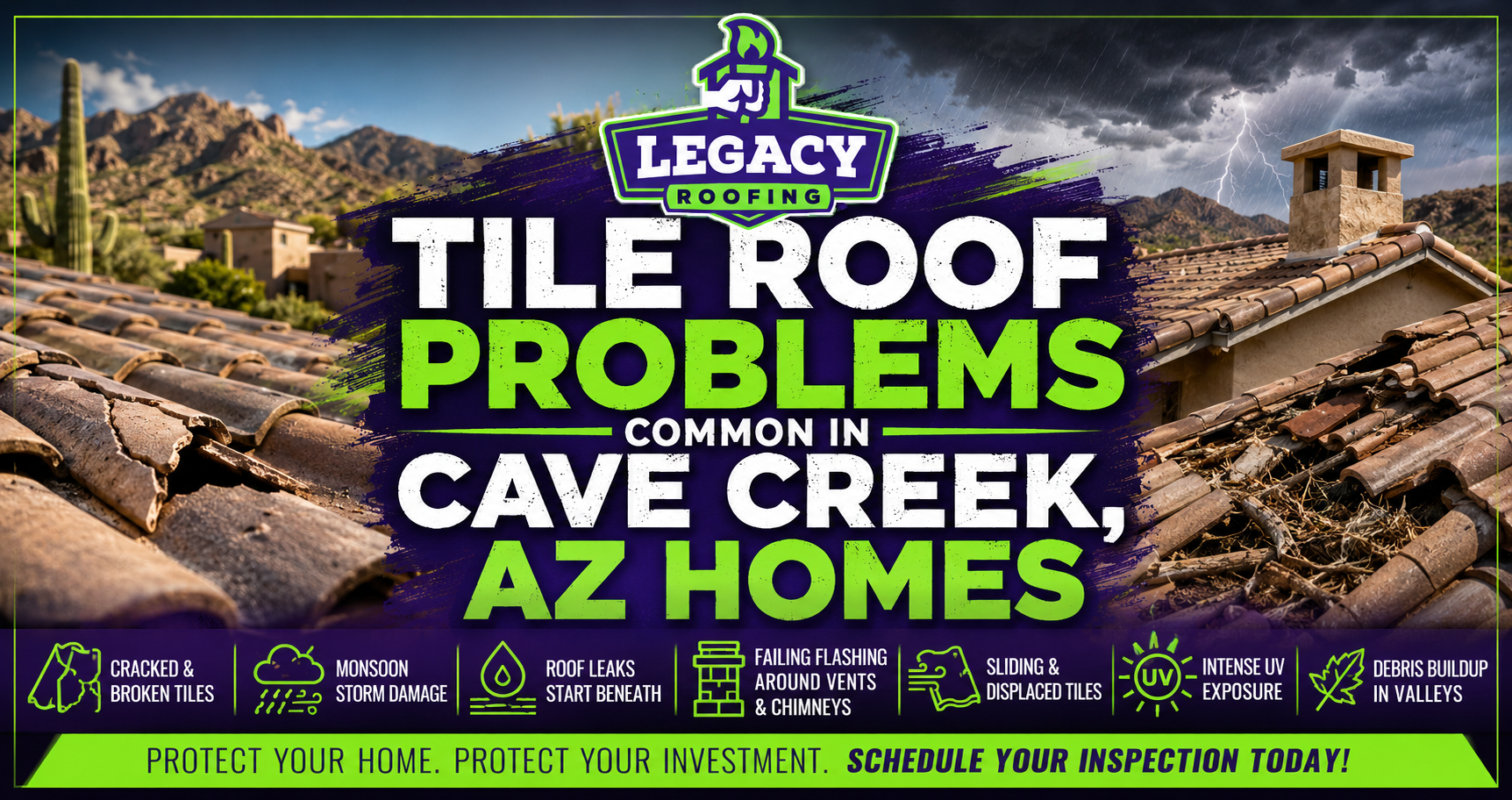
Whether you’re driving through the custom new builds in the desert foothills or the horse properties near Spur Cross, it’s common to see tile roofs covering the homes of Cave Creek. Tile has been a top choice for decades, offering durability and curb appeal for houses across the Sonoran Desert. But years of desert exposure can put added wear and cause damage that often goes unnoticed until you’re left with piles of Cave Creek roof repair bills.
Why Tile Roofs Are Popular in Cave Creek
Cave Creek homeowners often opt for tile roofs to fit the architecture and climate. The Spanish, Mediterranean, and Southwestern homes across town were built with clay and concrete tile, and offer added durability in the desert that other options like asphalt can’t quite match.
Tile also reflects sunlight rather than absorbing it, helping local homes stay cooler during the brutal triple-digit summers. The material naturally resists fire, rot, and insects and offers a 50- to 100-year lifespan, meaning the tiles themselves rarely need to be replaced.
Cracked and Broken Roof Tiles After Desert Weather Exposure
Cracked and broken tiles are one of the most common issues on Cave Creek roofs, often caused by the desert’s temperature swings. With July afternoons reaching over 100 degrees and January nights dropping near freezing, the constant expansion and contraction can cause stress fractures in the tile over time. Once a crack forms, it exposes the waterproof layer underneath to the sun and water, which causes the damage to spread.
How Monsoon Storms Damage Tile Roof Systems
Cave Creek’s mid-June through September monsoon season takes a serious toll on concrete and clay tile roofs. Winds over 50 miles per hour, sudden downpours, blowing dust, and occasional hail lift and crack tiles or move them out of place. Wind-blown rain can then get forced up under the tiles and reach the underlayment, where it seeps into your home and begins damaging your belongings.
The Hidden Risk of Aging Roof Underlayment
The underlayment is the waterproof layer that lies directly beneath the tiles and is often the most common culprit behind a leaking roof. The tiles act as a shield for the felt or synthetic layer beneath, which is designed to keep water out of your home.
While tiles can last up to a century, underlayment in Arizona often needs to be replaced every 20 to 30 years. Many homes in Cave Creek still feature their original underlayment, with decades of intense heat and dry desert air baking it brittle while the tile above stays in good condition.
Roof Leaks That Start Beneath the Tiles
Most concrete or clay tile roof leaks in Cave Creek start beneath the actual tiles. Once the underlayment cracks or the flashing gives out, water can seep beneath the surface and travel along the decking until it finds its way into your home. Water can run several feet along a rafter or through a low-slope section before dripping through your ceiling.
Why Roof Flashing Fails Around Vents and Chimneys
Roof flashing repairs are often required around vents, chimneys, and skylights because those transitions are the weakest points on any tile roof. Flashing is the metal and sealant that bridges the gap where the roof meets a penetration or wall, and is the most susceptible to monsoon roof damage in Cave Creek.
Strong UV, monsoon winds, and wind-blown rain can dry out, shrink, and crack sealants, leaving a gap. From there, leaks can develop around the spots you’d least expect and make their way into your home.
Sliding and Displaced Tiles on Arizona Roofs
Over time, the fasteners that hold tiles in place can corrode or loosen, leaving gaps that expose everything underneath. With the intense heat adding to the problem by deteriorating mortar along hips and ridges, and wind shifting tiles down the slope, even a small slip creates the ideal opening for water to enter and soak into the underlayment.
How Intense UV Exposure Impacts Tile Roofing Components
While tile is equipped to handle the sun, intense UV exposure breaks down the other components of your roofing system far faster than it does. With Cave Creek’s higher elevation and clear, sunny skies, your roof absorbs nearly non-stop ultraviolet radiation every day, which wears down underlayment, dries out sealants and flashing, and fades protective coatings.
Debris Buildup in Roof Valleys and Drainage Areas
Harsh monsoon winds, heavy rain, and desert debris can cause buildup in your roof valleys and drainage channels. Palo verde and mesquite litter can clog rooftops, while cottonwoods can blow leaves and twigs that pile up with dust and sand.
Without proper drainage, rainwater has nowhere to go and can back up, pooling rather than draining off the roof. During a heavy monsoon downpour, that water gets pushed under the tiles and into the underlayment, where it soaks in and leaks into your home.
Signs Your Tile Roof Needs Immediate Attention
When your tile roof starts to fail, you’ll often notice a few warning signs that it requires immediate attention. Keep an eye out for the following:
- Water stains or discoloration on ceilings and walls
- Cracked, broken, or visibly slipping tiles
- Fragments or granules collecting in your gutters
- Daylight shining through the roof in your attic
- A musty smell or signs of moisture in your attic
How Wildlife Can Damage Tile Roofs in Cave Creek
Slipping, cracked, or displaced tiles make the ideal shelter for desert animals looking to escape the intense heat. Once an animal opens or widens a gap, water can seep in behind it, turning a pest problem into a roofing problem.
Packrats often build nests in the gaps under tiles or gnaw through the underlayment and wiring. Birds like gilded flickers and Gila woodpeckers can nest in the roof and peck at fascia and trim, while pigeons leave droppings that hold moisture against the tile.
The Importance of Routine Tile Roof Inspections
Routine tile roof inspections are one of the best ways to protect your roof from the desert elements. Because the underlayment and flashing beneath the tile often hide the damage, it’s hard to judge your roof’s health from the ground.
Professional inspections check the condition of the underlayment, flashing, and tiles to catch the problems you can’t see. Scheduling a maintenance visit before monsoon season hits and again after it passes helps you repair roof leaks or wear early before they seep into and damage your home.
When Tile Repairs Are No Longer Enough
Tile roof repairs help fix isolated problems, but they often aren’t a long-term solution for major damage. If your underlayment is nearing the end of its lifespan or failing across the entire roof, repairs can only give you a little more time before the next leak appears.
When the waterproof system underneath your tile is failing, lift-and-relay offers a long-term fix that protects your home for years to come. During this process, professionals carefully remove existing tile, replace the underlayment, and reinstall the same tiles. Because tile has such a long lifespan, you can get a fully restored roof without paying for a brand-new one.
How Legacy Roofing Delivers Lasting Tile Roof Solutions
At Legacy Roofing, we understand the strain that Cave Creek’s desert heat and monsoon storms put on tile roofs. Since 2009, our Cave Creek roofing company has served the area with lasting tile roof solutions built for the Sonoran Desert climate.
Our licensed, bonded, and insured five-star-rated technicians offer roof tile repairs, roof replacements, lift-and-relay services, and maintenance services tailored for desert homes. Whether you need a roof rejuvenation, preventative tile roof maintenance, or a full lift and relay, you can count on our team for honest assessments and solutions that protect your home for years to come.
Schedule a Tile Roof Inspection With Legacy Roofing
Don’t wait until a monsoon storm sends water rushing into your home. Schedule a tile roof inspection in Cave Creek today to catch hidden issues early before they turn into major problems. Our team offers free assessments across Cave Creek, Carefree, and surrounding areas, so you know exactly where your roof stands before the next storm sets in.
Curious about the cost? Try our instant online roof estimator tool for a quick, no-obligation estimate, or call us today to get started
