


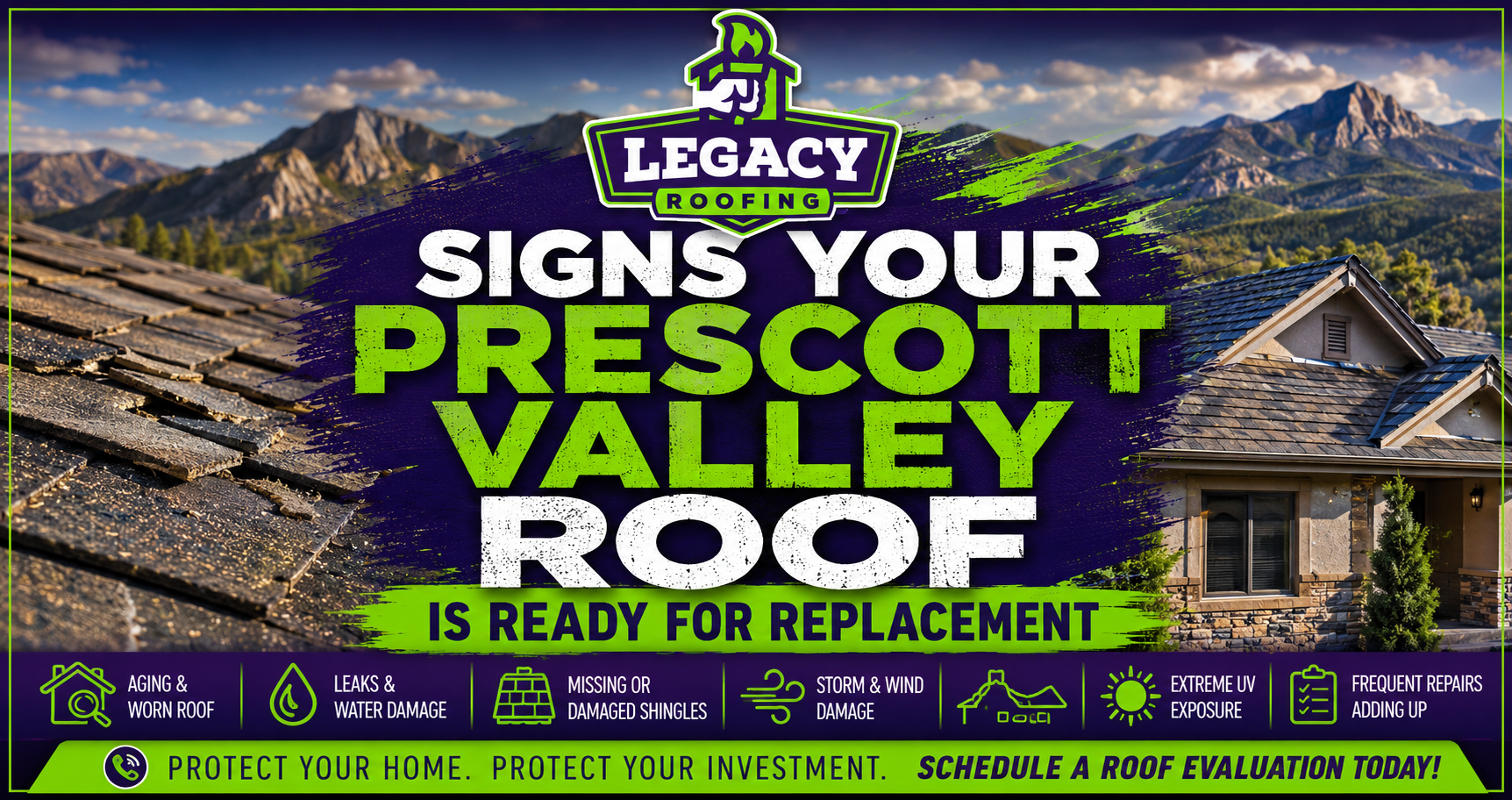
Many central Arizona homeowners aren’t sure when to replace a roof in Prescott Valley, but recognizing the warning signs early can help prevent more costly repairs. If you’ve been putting off a Prescott Valley roof repair, it may be time to take a closer look at whether your roof is nearing the end of its service life.
Why Roof Replacement Matters for Prescott Valley Homes
Prescott Valley sits at roughly 5,100 feet in elevation, which creates a climate unlike most of the Phoenix metro. Residents deal with intense UV exposure, cold winters, summer monsoons, and dramatic temperature swings that can move from the 90s during the day to the 50s overnight.
Every season brings a different stressor, and knowing when roof repair stops being enough is one of the most important decisions a homeowner can make.
How Long Does a Residential Roof Typically Last?
Arizona roof lifespans run shorter than national averages for most materials. In Prescott Valley, asphalt shingles last 15 to 20 years, while higher-end materials like tile or metal can reach 30 to 50 years with proper care. Roof lifespan in Arizona depends on maintenance history, ventilation quality, and material grade.
Missing or Damaged Shingles
Missing shingles in Prescott Valley are more than a cosmetic issue. Once a shingle is gone, the underlayment and decking beneath it are exposed to UV rays, monsoon rain, and debris. A few missing shingles after a windstorm can sometimes be repaired, but when the pattern is widespread or recurring, it’s often an indicator that you’re due for a shingle roof replacement.
A Prescott roof repair assessment can tell you whether isolated fixes still make financial sense or whether replacement is the smarter path forward.
Granule Loss and Roof Surface Wear
Asphalt shingles are coated with granules that protect the material from UV degradation. When those granules shed, the shingles lose their protective layer and break down faster.
Homeowners can identify granule loss by checking the gutters and downspout discharge areas after rain. Heavy accumulation of dark, sand-like granules is a reliable indicator that shingles are wearing out. Bald patches visible from the ground through binoculars, or during a professional inspection, are another sign. Once granule loss becomes widespread, the roof’s remaining service life is limited, and roof maintenance visits alone won’t reverse the deterioration.
Roof Leaks and Water Intrusion Warning Signs
Roof leaks in Prescott Valley, AZ, are one of the clearest signs you need a new roof. Warning signs include:
- Water stains on interior ceilings.
- Damp attic insulation.
- Peeling paint near exterior walls.
When a leak is isolated to a failed flashing seal or a single damaged shingle, repair is often sufficient. But when roof leaks show up in multiple areas, return after prior repairs, or are tied to widespread shingle degradation, roof replacement is the likely solution.
Sagging Areas That Require Immediate Attention
Sagging could indicate structural roof damage and should never be dismissed as a cosmetic concern. A dip or soft spot on the roof surface can indicate rotted decking, failed rafters, or long-term moisture intrusion.
Unlike surface wear, sagging signals damage that has progressed well beyond the point where spot repairs are viable. If you notice any visible depression in the roof surface or signs of sagging from the ground, schedule a professional inspection before the next rain event.
How Arizona Sun Exposure Affects Roofing Materials
Prescott Valley sits in a high-desert environment where the sun angle and UV index are aggressive year-round. Intense sun exposure accelerates the breakdown of asphalt-based materials by drying out the oils that keep shingles flexible, causing them to curl, crack, and become brittle.
That process speeds up significantly on south and west-facing roof slopes that absorb the most direct afternoon sunlight. Reflective roofing materials and proper ventilation help slow that process, and roof rejuvenation services can extend a roof’s lifespan.
Storm Damage and Wind-Related Roofing Issues
Prescott Valley’s monsoon season can bring sudden high winds, heavy rain, and even hail at elevation. Wind damage often shows up as lifted or curled shingle edges, torn flashing, or exposed nail heads. Hail leaves dimpled impact marks that accelerate granule loss and shingle degradation.
Even minor roof damage in Prescott Valley, AZ, can accelerate deterioration when exposed to repeated monsoon rains and intense UV exposure. After any significant storm, a roof condition assessment is worth scheduling even if no visible leaks have appeared inside yet.
Signs of Aging Around Roof Flashing and Valleys
Flashing plays a central role in roof performance, sealing the transitions between the roof surface and vertical elements like chimneys, skylights, and walls. Valleys, where two roof planes meet, are high-flow drainage points that concentrate water during rain events.
Cracked, corroded, or improperly sealed flashing allows water to penetrate. On a Prescott home approaching 20 years old, these areas deserve extra scrutiny during any roof evaluation.
When Roof Repairs May No Longer Be Enough
The difference between roof repair and residential roof replacement in Prescott Valley, AZ, often comes down to scope and pattern. Repairing isolated damage is cost-effective when the surrounding roof system is in good condition, but when repairs become frequent, cover large sections, or keep returning in the same spots, the system has likely aged past the point of efficient patching.
Comparing the cumulative cost of recent repairs against the projected cost of a full replacement is a practical way to evaluate an aging roof. Prescott roof installation with higher-grade materials, such as a tile roof, can also improve energy efficiency.
The Importance of a Roof Inspection
A roof inspection for a Prescott Valley home should happen at least once a year, with a second check recommended after any major storm. Many issues that lead to costly damage, including early flashing failure, granule loss, and cracked sealant, won’t announce themselves with interior leaks until the damage is well advanced.
A professional roof inspection in Prescott Valley, AZ, gives homeowners a clear picture of how much useful life remains. It also creates a baseline record that makes it easier to track roof deterioration over time. Having documented inspection history helps homeowners make better-informed decisions about when to replace a roof in Prescott Valley.
Benefits of Replacing an Aging Roof
Replacing an aging Prescott Valley roof removes the uncertainty that comes with a system that’s showing widespread wear. A new roof installed with quality materials and proper underlayment, like SharkSkin, offers a significant improvement in moisture protection and wind resistance over most older roofs.
Better ventilation, reflective shingle options, and updated installation techniques also contribute to a home that stays cooler through Prescott Valley summers. For homeowners planning to sell, a new roof supports home value and removes it as a negotiation point during inspection.
Why Homeowners Choose Legacy Roofing
Legacy Roofing has built its reputation across Arizona by pairing experienced craftsmanship with transparent communication. From the first estimate to the final inspection, homeowners know what to expect, the materials we’ll use, and the reasons behind specific recommendations.
We’re licensed, bonded, and insured, and we offer warranties on both materials and workmanship. Our team brings firsthand familiarity with the demands of high-desert roofing in Yavapai County, including the thermal cycling, monsoon exposure, and UV stress that Prescott Valley homes face year-round.
Schedule a Roof Evaluation in Prescott Valley
If your roof is showing any of the signs covered above, now is a good time to get a local roofing contractor in Prescott Valley, AZ, to take a look before the next monsoon season arrives.
Contact Legacy Roofing to schedule a consultation or get an instant quote using our free online roof estimator to get a clear sense of where your project stands before you commit to any roofing project.
